

The prostate is a gland that is located below the bladder and in front of the rectum. It is part of the reproductive system and contributes to seminal fluid production. It is common for the prostate gland to enlarge as men age. This growth increase can lead to urinary symptoms such as weak urinary stream, frequency and/or urgency of urination, straining to urinate, waking up at night to urinate, as well as other symptoms. Although prostate cancer and enlarged prostate can and oftentimes do coexist, enlarged prostate does not cause prostate cancer.
Symptoms related to an enlarged prostate may include:
Diagnosis of prostate enlargement is usually made by obtaining a patient’s medical history, performing a physical examination and at times obtaining a transrectal Ultrasound and/or cystoscopy (a small camera introduced into urethra and bladder) to measure and evaluate the anatomy of the prostate gland. A common physical examination involves palpating the prostate gland through the rectum, also known as the digital rectal exam or DRE.
Other diagnostic tests include measuring a post void residual volume (amount of urine left in the bladder after urination) and Uroflowmetry (noninvasive way to measure rate, volume and duration of urine flow).
There are many options, both invasive and noninvasive, available to treat BPH and the urinary symptoms related to it.
Non-invasive options include some medications that help relax the smooth muscle and its tone (such as the popular drug called Flomax) within the prostate gland and others that decrease the size of the prostate gland (a common example is Proscar).
Invasive options include various surgical techniques that in some fashion destroy prostate gland tissue, which in turn widens the urethra and improves urinary symptoms.
Transurethral resection of the prostate (TURP) is one of the oldest and remains one of the most common procedures performed for an enlarged prostate gland. TURP procedure involves resecting or physically removing part of the prostate gland that surrounds the urethra.
Some of the other available methods to treat BPH involve:
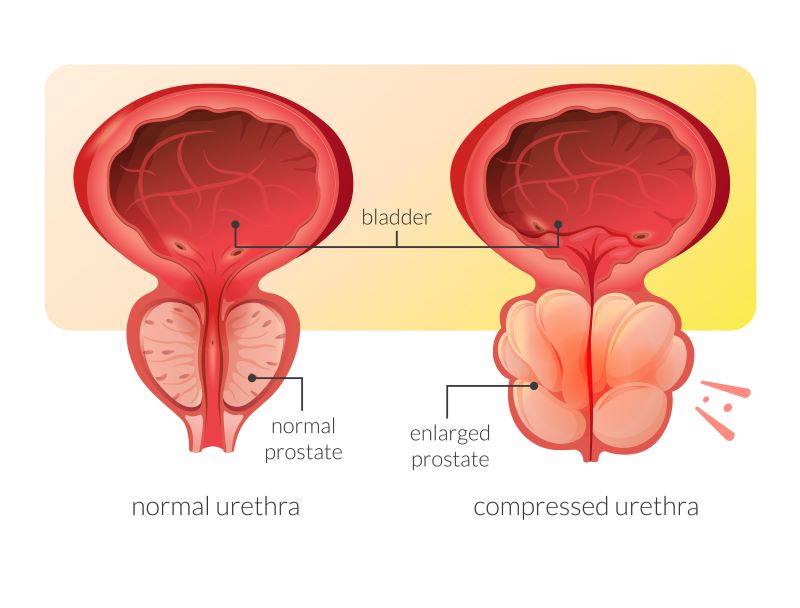
Having an enlarged prostate gland may or may not cause urinary symptoms. Most men with BPH have minimal symptoms that may be managed quite effectively with medications. Men whose symptoms are unresponsive to or progress on the medications may benefit from one of the procedures available to treat an enlarged prostate gland.
Having an enlarged prostate can sometimes lead to other symptoms and affect bladder and kidney function. For instance, enlarged prostate gland can lead to incomplete bladder emptying which may result in urinary incontinence, recurrent UTIs, pelvic pressure, bladder damage and bladder decompensation. Additionally, urine backing up into the kidneys from incomplete emptying can lead to kidney injury.
Medication side effects may include dizziness, lightheadedness, low blood pressure, dry ejaculations, erectile dysfunction and decreased sex drive.
Procedures performed on the prostate gland may result in bleeding, infection, urinary incontinence, dry ejaculation, urethral stricture formation and erectile dysfunction.
We are dedicated to compassionate and comprehensive urologic care, offering you necessary and appropriate evaluations and treatments that you may need to feel and be healthy. With years of experience in urologic care, we are the team that you can trust.
Urologic Surgery of NWI is your source of reliable information and excellent urologic care in the region. We are here to answer all of your questions and take care of you like family. Please contact us today to schedule your consultation appointment.

We will work together to jointly find the best treatment plan for you. We respect your wishes and are here to empower you to make your own decisions regarding your health and well being. Please contact our office to schedule a consultation.
Request An Appointment