

A urinary tract infection (UTI) refers to infection of the urinary tract, which may include the urethra, bladder, prostate and/or kidneys. Bacteria is the most common causative agent of UTIs, but fungi (yeast) and viruses can also rarely cause urinary tract infections.
Typically, UTIs are not transmitted from person to person and instead are caused by bacteria residing within one’s own body such as in the vagina, on the perineum and/or in the gastrointestinal tract.
Some people are more prone to UTIs than others. Risk factors for UTIs include, but are not limited to, weak immune system, older age, menopause, anatomical abnormalities, kidney or bladder stones, incomplete bladder emptying, incontinence and harboring virulent bacteria.
There are many possible symptoms of a UTI. These may include:
Diagnosis of a non complicated UTI is usually made by obtaining a medical history, performing a physical examination and ordering tests such as urinalysis and urine culture.
For severe infections or infections that are recurrent, additional testing such as imaging and/or direct visualization of the bladder with a camera, may be warranted.
The most common treatment of a UTI is antibiotics. Other treatments may include addressing the underlying condition(s) that may have contributed to the UTI(s), such as estrogen replacement therapy for postmenopausal women with frequent UTIs.
Preventative strategies may include increasing fluid intake, voiding in a timely fashion without holding the urine in the bladder, taking supplements such as vitamin C and cranberry extract.
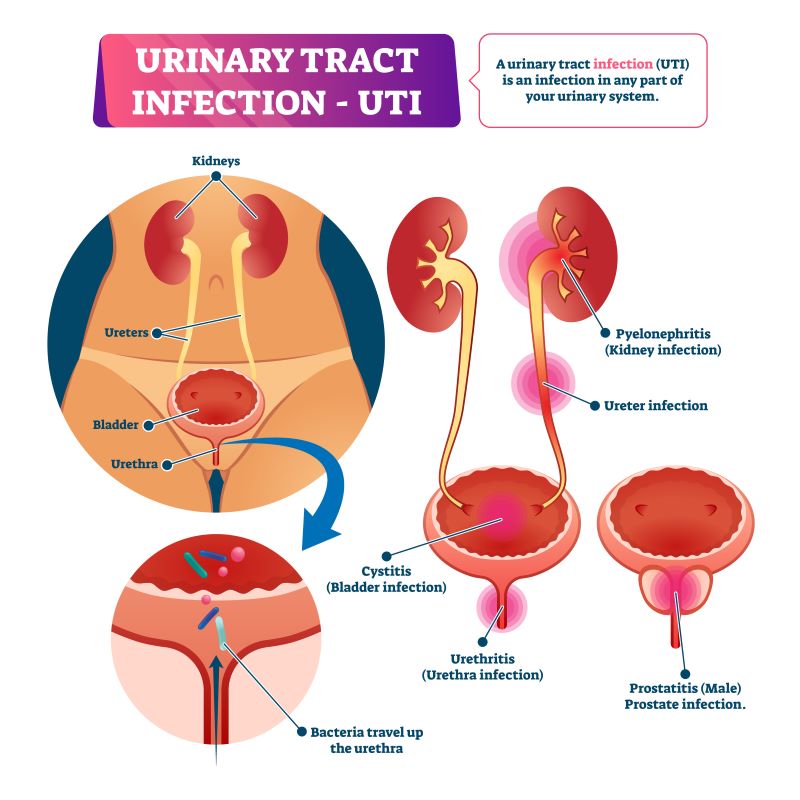
Bacteria that reside in other parts of your body can enter the urinary tract and infect the urethra, bladder, prostate, kidneys and/or testicles. Most common bacteria to infect the urinary tract is E. coli.
Some UTIs can resolve on their own but others may progress to a severe infection that requires immediate attention and treatment. It’s best to consult with your doctor as soon as you experience UTI symptoms to expedite evaluation and treatment.
Unless your UTI is caused by a sexually transmitted infection such as chlamydia and/or gonorrhea, it is unlikely that you will sexually transmit a UTI to your partner.
We are dedicated to compassionate and comprehensive urologic care, offering you necessary and appropriate evaluations and treatments that you may need to feel and be healthy. With years of experience in urologic care, we are the team that you can trust.
Urologic Surgery of NWI is your source of reliable information and excellent urologic care in the region. We are here to answer all of your questions and take care of you like family. Please contact us today to schedule your consultation appointment.

We will work together to jointly find the best treatment plan for you. We respect your wishes and are here to empower you to make your own decisions regarding your health and well being. Please contact our office to schedule a consultation.
Request An Appointment